Now and Then
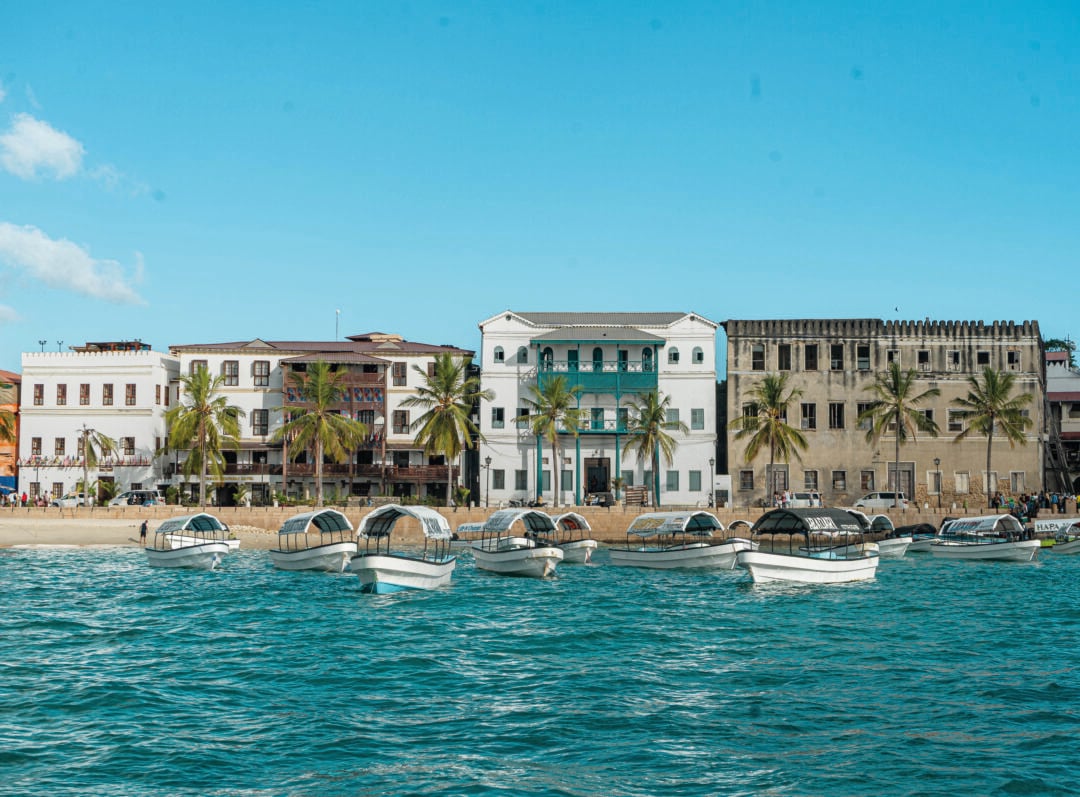
On the seafront of Mizingani in Zanzibar one can see how time passes. Nowadays, tourists and locals like promenading along the picturesque stretch – the first thing you see when arriving in Zanzibar by ferry (colour photo). Before independence, the Stone Town seafront was the centrepiece of the Omani royal household who ruled Zanzibar for 200 years (panorama photo of 1926). And with it, came comfort. US educator and historian Torrence Royer, who provided the historic photos shown here, recounts: “The Mizingani seafront was the first area to be electrified in 1875” – not only in Zanzibar but in the entire Sub-Saharan Africa. By 1915, a railway was running from here up north to the village of Bububu, named after the sound of the steam locomotive (seen on the photo on its way back).
Unfortunately, what could have been kept as transport, even a great tourist attraction, was forgotten when Zanzibar became part of Tanzania.
Monument protection often lacks money in Zanzibar; in Mizingani, too, not all old buildings have been brought back to life. But when they are, it usually pays off: the Mizingani hotel on the left (colour photo) is very popular with tourists; next to it, the Custom’s House with green balconies, is also well restored. The house on the right, however, has deteriorated into a ruinous state despite its historic significance.
From 1860 to 1900, it was known as the Grand Hotel Central Afrique, the first European-style hotel ever in Zanzibar. Prominent guests included runaway princess Salme, the Sultan’s daughter, who escaped in 1866 with a Hanseatic trader. With her three children (small photo) she sought refuge here 20 years later – as unwelcome as prince Harry and his family in Britain today. Rumours have it, the building may become a hotel again – if it survives.
Share